Overview of Manual to Automatic Conversion
Converting a manual to automatic involves swapping the gearbox, installing a torque converter, and integrating electronic controls. Older pre‑2000 models are easier due to few electronics, while modern CAN‑bus cars require extensive rewiring and sensor work. This swap requires compatible mount, cooling, ECU!
1.1 Definition and Scope
Converting a manual‑to‑automatic transmission requires mechanical alignment, ensuring the new gearbox fits within the engine bay without compromising structural integrity. The electrical integration is critical; the engine control unit must be reprogrammed to recognize the new torque converter’s input and manage shift timing. Cooling must be addressed; automatic transmissions dissipate more heat, so a dedicated cooler and adequate coolant flow are essential to prevent premature wear. Documentation of every modification, including torque specifications, shift map data, and sensor calibrations, is crucial for future serviceability and to satisfy regulatory compliance. All steps are recorded in a detailed log to support future diagnostics and warranty claims. The final verification includes a full diagnostic scan, a road test at varying speeds, and a review of all sensor outputs to confirm that the transmission operates within manufacturer‑specified limits. With the conversion complete, owners can enjoy smoother shifts and the vehicle’s character. Enjoy!
Motivations for Conversion
Drivers seek smoother shifts, reduced driver effort, and comfort. Automatic gearboxes improve acceleration, fuel economy, and drivability! Older pre‑2000 cars lack electronics, making the swap simpler, while newer models demand extensive wiring and sensor integration!!!
2.1 Performance and Comfort Benefits
Converting a manual gearbox to an automatic can dramatically improve a vehicle’s driving experience. The primary advantage is smoother, almost seamless gear changes that eliminate the jerky feel of clutch engagement and gear selection. This translates into reduced driver fatigue, especially on long commutes or highway cruising. Automatic transmissions also provide consistent torque delivery, allowing the engine to operate closer to its optimal power band. As a result, acceleration improves in most situations, and the vehicle feels more responsive when overtaking or merging. In addition, many modern automatics incorporate advanced torque‑converter lock‑up and variable‑ratio gear ratios that help maintain fuel‑efficient engine speeds, reducing idle losses and improving overall mileage. Comfort is further enhanced by the elimination of the clutch pedal, which removes the need for constant foot pressure and allows drivers to keep both feet on the brake or accelerator during normal driving. The smoother engagement also reduces wear on drivetrain components, extending the life of the transmission and associated parts. For older pre‑2000 models, the conversion is relatively straightforward because the vehicle’s electronics are minimal; the new transmission can be paired with a simple aftermarket ECU or a standalone computer that maps shift points and throttle response. In contrast, modern CAN‑bus vehicles require extensive rewiring and sensor integration, but the payoff is a fully integrated system that can communicate with traction control, stability systems, and adaptive cruise control. When properly installed, the automatic system can also improve safety by providing quicker, more precise gear changes during emergency braking or slippery conditions. The conversion also necessitates a dedicated transmission cooler to manage the higher thermal load, preventing premature failure. By installing an upgraded cooler, the system can maintain optimal operating temperatures even during aggressive driving or towing. Additionally, the new torque converter can be tuned for specific driving styles, offering a sport mode with quicker shifts or a comfort mode with gentle transitions. These options give drivers flexibility to tailor the vehicle’s behavior to their preferences, making the manual‑to‑automatic swap an attractive option for owners who value ease of use, fuel economy, and a more relaxed driving experience.
2.2 Fuel Efficiency Considerations
When a manual gearbox is swapped for an automatic, fuel economy can either improve or worsen depending on several variables. Modern automatics are engineered with multiple gear ratios and lock‑up torque converters that keep the engine operating in its most efficient RPM band during cruising. This can reduce fuel consumption by 2–5 % on highway drives, especially in vehicles that previously struggled to maintain low idle speeds. However, the added weight of the torque converter and the transmission fluid pump introduces a small parasitic draw from the engine, which may increase fuel usage by a few hundredths of a percent. The most significant factor is the electronic control strategy. An aftermarket ECU that maps shift points to the driver’s throttle input can optimize fuel usage, whereas a stock automatic may not be tuned for the specific engine and vehicle weight. For pre‑2000 cars, the conversion is often cost‑effective because the original manual lacked sophisticated fuel‑management electronics; the new automatic can be paired with a simple computer that improves idle control and reduces pumping losses. In contrast, modern CAN‑bus vehicles require extensive sensor integration, but the resulting system can communicate with engine‑management modules to adjust fuel injection and ignition timing in real time, yielding better mileage. Drivers who prioritize fuel economy should consider a dual‑clutch or continuously variable transmission (CVT) as an alternative, as these systems can offer superior efficiency in both city and highway conditions. Ultimately, the fuel‑efficiency outcome depends on the specific vehicle, the quality of the conversion, and the driver’s habits. A well‑executed swap with a properly tuned ECU and adequate cooling can deliver measurable savings, but the trade‑off is increased complexity and potential maintenance costs.
Vehicle Age and Electronics Compatibility
Older pre‑2000 cars lack complex electronics, making automatic swaps straightforward. Modern CAN‑bus models integrate traction and stability systems; converting them demands extensive rewiring, sensor integration, and may disable features like cruise control.
3.1 Pre-2000 Vehicles vs Modern CAN-Bus Models
When planning a manual‑to‑automatic conversion, vehicle age is a decisive factor. Cars built before 2000 typically feature mechanical linkages and simple electronic control units (ECUs) that manage ignition timing, fuel delivery, and basic sensor inputs. Because these systems are largely isolated, swapping in an automatic transmission—complete with a torque converter, planetary gearset, and hydraulic pump—can be accomplished with minimal re‑wiring. The primary tasks are mounting the new gearbox to the engine cradle, connecting the shift linkage or electronic shift module, and installing a suitable cooling system for the torque converter. In many cases, the stock ECU can be re‑programmed or replaced with a standalone transmission control module that communicates via a simple serial or CAN interface, allowing the vehicle to retain its original engine management while gaining automatic shifting.
In contrast, modern vehicles (post‑2000) rely on a full CAN‑bus architecture that interconnects engine control, transmission control, traction control, stability management, and driver‑assist systems. The transmission is no longer a standalone component; it is an integral part of the vehicle’s safety net. Converting such a car requires not only mechanical adaptation but also a comprehensive electronic overhaul. The original transmission control unit must be replaced or heavily modified, and the new unit must be integrated with the vehicle’s CAN‑bus network. This often involves installing additional sensors (throttle position, wheel speed, brake pressure), rewiring the steering column to provide shift signals, and ensuring that the torque converter’s hydraulic pump is compatible with the vehicle’s cooling loop. Moreover, features like hill‑start assist, automatic transmission lock‑up, and adaptive shift logic may become inoperative unless custom firmware is developed.
The cost and complexity of a conversion therefore scale with the vehicle’s electronic sophistication. A pre‑2000 model might require a few hundred dollars for parts and a handful of hours of labor, whereas a modern CAN‑bus car can push the budget into the thousands, demanding specialized diagnostic tools, software, and sometimes a custom ECU build. When deciding whether to proceed, owners should weigh the mechanical simplicity of older cars against the integrated safety and performance benefits that modern electronics provide.
- Pre‑2000: minimal electronics, easier swap.
- Modern CAN‑bus: full integration, complex wiring.
- Cost ranges from $500 to $5,000+.
Mechanical Conversion Components
Key parts: a compatible automatic gearbox, a torque converter, a hydraulic pump, and a clutch assembly. The engine mounts may need reinforcement, and the shift linkage or electronic shift module must be fitted. Proper cooling and a revised bell‑housing are essential.
4.1 Transmission Swap Options
When converting a manual to an automatic, the first decision is the source of the new gearbox. The most common approach is to use an OEM automatic from the same manufacturer, which guarantees bolt‑on compatibility but can be expensive. A second option is to select an aftermarket automatic from a different brand that matches the engine’s power and torque curve; these units often require a custom bell‑housing adapter and a new torque converter. A third route is a rebuilt transmission, which can be cost‑effective if the original unit is still functional but needs a new clutch assembly or hydraulic pump. Finally, some enthusiasts opt for a standalone computer that controls a “transmission‑in‑a‑box” kit; this requires extensive wiring, a new shift linkage or electronic shift module, and a dedicated cooling system to handle the increased heat output. Each option varies in cost, complexity, and reliability, and the choice depends on the vehicle’s age, the availability of parts, and the owner’s mechanical skill level.
Typical labor for a full swap ranges from 15 to 25 hours, translating to $1,500–$3,000 in shop rates. Parts cost varies: a used OEM automatic may cost $1,200–$2,500, while a rebuilt unit can be $800–$1,500. Additional expenses include a new torque converter ($200–$400), transmission cooler ($150–$300), and ECU tuning ($300–$600). Total conversion budgets often fall between $3,500 and $7,000, depending on vehicle age and parts sourced.
Diag pre‑inspection costs $150 ensures now compatibility.
4.2 Torque Converter and Clutch Replacement
Converting a manual gearbox to an automatic hinges on installing a torque converter and a hydraulic clutch pack. The converter replaces the clutch, providing a fluid coupling that lets the engine spin freely while the transmission engages. A typical converter has a pump, turbine, and stator; the pump is driven by the engine, the turbine drives the input shaft, and the stator redirects fluid for efficiency. Matching the converter to the engine’s horsepower and the transmission’s torque rating is essential to avoid over‑stress or under‑performance. Many shops offer a “converter kit” that includes a pump housing, turbine housing, stator assembly, and a new torque‑converter shaft that mates to the input shaft, replacing the old clutch plate and pressure plate assembly.
Clutch replacement is required because the automatic’s hydraulic system demands a different clutch design. The standard manual clutch plate is replaced by a multi‑plate clutch or hydraulic clutch pack that can be actuated by the transmission’s hydraulic pump. Installing the clutch pack involves removing the old clutch assembly, mounting the new pack on the flywheel, and routing hydraulic lines to the converter. The new clutch pack must be matched to the engine’s torque curve, and hydraulic pressure must be calibrated to avoid chatter or premature wear. Many conversion kits include a pressure plate, clutch discs, and a hydraulic line kit, simplifying the process for the mechanic.
After installing the converter and clutch pack, the transmission’s input shaft must be aligned with the engine’s crankshaft. A torque wrench tightens the converter bolts to the manufacturer’s specified torque, typically 80–120 ft‑lb. Once the converter is secured, the hydraulic lines are tested for leaks, and the transmission is filled with the correct fluid type and volume. The ECU is then re‑programmed or replaced with a compatible unit that can control the new automatic’s shift logic, throttle response, and torque converter lock‑up function. Proper calibration ensures that the vehicle’s throttle mapping, shift points, and stability control systems work in harmony with the new automatic drivetrain. In summary, the torque converter and clutch replacement are the backbone of a manual‑to‑automatic conversion. They must be carefully selected, matched, and installed to ensure reliability, performance, and safety. The process involves mechanical work, hydraulic integration, and electronic tuning, and should be performed by a skilled technician familiar with transmission conversions.
Electrical and Sensor Integration
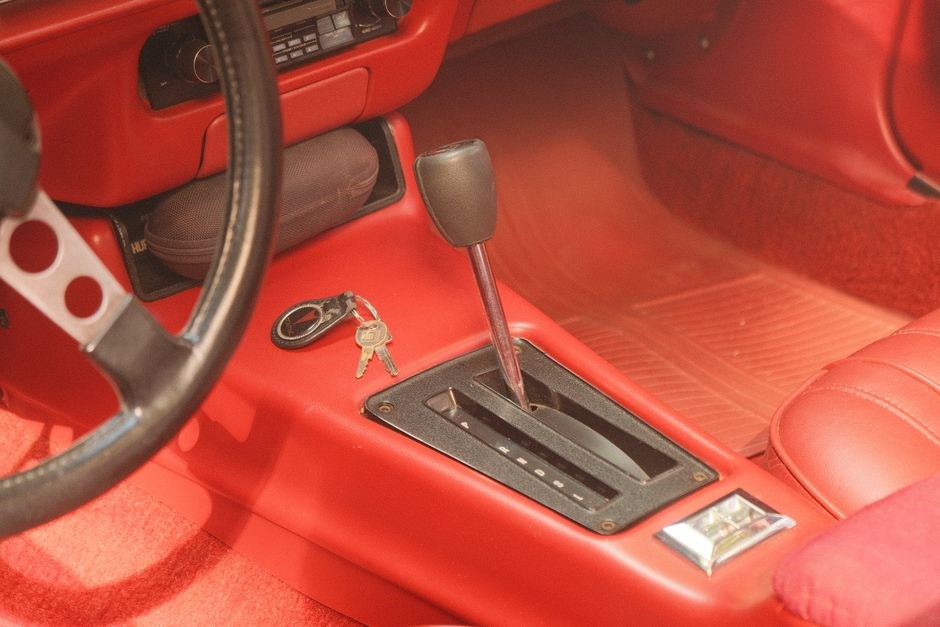
Integrating sensors and electronics is critical when swapping to an automatic. The throttle position sensor, shift‑solenoid, and transmission control module must be re‑wired or replaced. Modern CAN‑bus cars require a new ECU or a standalone computer to manage shift logic, torque converter lock‑up,andcontrol.
5.1 Throttle and Shift Mapping
Converting a manual gearbox to an automatic requires precise throttle and shift mapping to ensure smooth operation and driver comfort. The throttle position sensor (TPS) must be calibrated to match the automatic transmission’s torque converter characteristics, preventing abrupt acceleration or lag. Engineers typically use a standalone transmission control module (TCM) or reprogram the existing engine control unit (ECU) to interpret TPS signals correctly. Shift mapping involves defining gear‑selection logic based on vehicle speed, engine RPM, and driver input. For a manual‑to‑automatic swap, the shift‑solenoids are replaced with electronic solenoids that the TCM can control. The mapping table is then tuned so that up‑shifts occur at optimal RPM ranges, while down‑shifts happen during deceleration or when higher torque is needed. In modern vehicles, this process also requires integrating the transmission with the vehicle’s CAN‑bus network, ensuring that stability control, traction control, and cruise‑control modules receive accurate shift data. Failure to map these signals properly can lead to loss of traction control, erratic shifting, or even transmission damage. Therefore, a professional diagnostic scan tool is essential to read and write the correct parameters. After mapping, a thorough road test validates that the throttle response feels linear and that gear changes are seamless, providing the driver with the expected automatic feel while maintaining the mechanical integrity of the swapped transmission!!!
5.2 Compatibility with Traction Control and Stability Systems
When a manual gearbox is replaced by an automatic, the vehicle’s electronic stability and traction control systems must be re‑engineered to recognize the new shift logic. Modern cars rely on CAN‑bus messages that report gear position, shift timing, and torque converter load; if the transmission no longer sends these signals, the control modules will misinterpret wheel slip and may disable traction assistance. To preserve full functionality, a custom interface or a rebuilt ECU is required to translate the automatic’s solenoid status into the legacy messages the original modules expect. The throttle mapping in section 5.1 must be tuned so the engine’s torque curve matches the automatic’s input, preventing torque spikes that could trigger traction control’s anti‑drift logic. In many pre‑2000 vehicles, the absence of a CAN‑bus network means traction control is either absent or operates on simple wheel‑speed sensors; the conversion can proceed without extensive re‑programming, but the driver may lose hill‑start assist. For modern CAN‑bus models, the cost and complexity rise sharply, as the entire electronic architecture must be re‑wired and re‑validated; A professional diagnostic scan tool is essential to verify that all control messages are correctly transmitted and that the stability system remains fully operational after the swap. Failure to do so can result in loss of traction control, erratic braking behavior, or safety‑critical system failures during high‑speed maneuvers. This vehicle remains compliant. All safety systems continue to function. Now.
Cooling and Heat Management
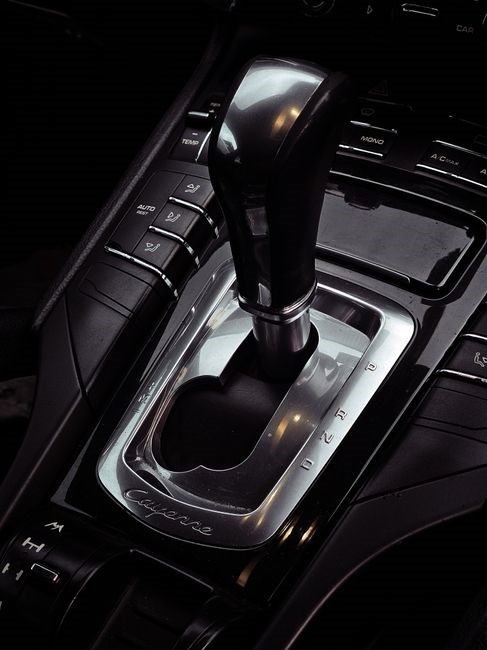
Automatic also transmissions produce higher thermal loads than manual gearboxes,mainly due to the torque converter’s fluid dynamics and continuous planetary engagement. The conversion requires a robust cooling strategy. A dedicated transmission cooler—often a larger radiator or separate oil cooler—must be installed to dissipate excess heat during acceleration, hill climbs, and heavy also towing. The cooler should be sized based on the vehicle’s engine displacement, duty cycle, and ambient temperatures, with a flow rate that matches the transmission’s fluid volume and heat transfer coefficient. In addition to the cooler, the transmission pan and seals must be upgraded to accommodate higher operating temperatures; high‑temperature synthetic fluids are recommended to improve viscosity stability and reduce sludge formation. The cooling system’s plumbing must be routed carefully to avoid interference with the existing engine cooling loop, and the pressure relief valve must be calibrated to the new fluid temperature profile. For vehicles originally equipped with a manual gearbox, the addition of an automatic’s torque converter introduces a new heat source that can raise the overall system temperature by 10–15 °C. This increase can affect adjacent components such as the clutch, brake lines, and the engine’s oil cooler, necessitating a comprehensive thermal audit. Finally, regular maintenance—checking fluid levels, inspecting hoses, and replacing filters—ensures the cooling system remains effective over the vehicle’s lifespan. By integrating these measures, the converted vehicle can maintain performance while mitigating the risks associated with elevated transmission temperatures.